
Telehealth vs. In-Person Care: Key Differences, Pros, Cons, and When to Choose Each
What Are the Important Differences Between Telehealth and In-Person Care?
Reviewed by Kamran Mahmood, MD, MPH, Associate Professor of Medicine, Duke University Medical Center, Board Certified in Pulmonology & Critical Care.
In recent years, telehealth has revolutionized the way we access healthcare. With platforms like OurExpertDoc.com, patients can now consult with US-based doctors from the comfort of their homes. But how does telehealth compare to traditional in-person care? What are the key differences, and how do you know which option is right for you?
In this article, we’ll break down the important differences between telehealth and in-person care, helping you make informed decisions about your health.
What Is Telehealth?
Telehealth refers to the use of technology to deliver healthcare services remotely. This can include video consultations, phone calls, or even chat-based communication with licensed healthcare providers. Platforms like OurExpertDoc.com make it easy for patients to connect with American Board-Certified doctors without the need for travel or long waiting times.
Telehealth is ideal for:
Managing chronic conditions and severe illnesses.
Seeking second opinions.
Minor illnesses like colds, rashes, or infections.
Follow-up appointments.
Patients in remote areas or with mobility challenges.
What Is In-Person Care?
In-person care is the traditional model of healthcare, where patients visit a clinic, hospital, or doctor’s office for face-to-face consultations. This type of care is essential for physical exams, diagnostic tests, emergencies, and treatments that require hands-on care.
In-person care is necessary for:
Physical examinations.
Diagnostic imaging (e.g., X-rays, MRIs).
Surgical procedures.
Emergency medical situations.
Key Differences Between Telehealth and In-Person Care
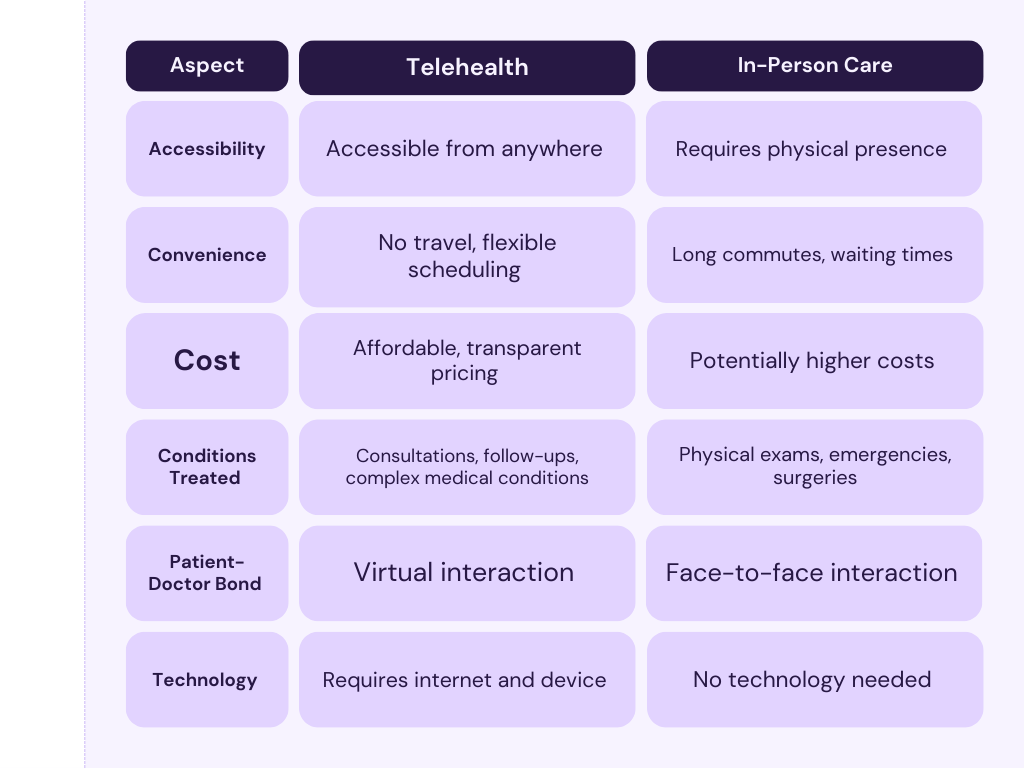
1. Accessibility
Telehealth: One of the biggest advantages of telehealth is its accessibility. Whether you’re at home, at work, or traveling, you can connect with a doctor as long as you have an internet connection. This is especially beneficial for patients in rural areas or those with limited mobility.
In-Person Care: Requires you to visit a healthcare facility, which can be time-consuming and challenging for patients who live far from medical centers.
2. Convenience
Telehealth: No need to commute, sit in waiting rooms, or take time off work. Appointments are often more flexible, and you can schedule them at your convenience.
In-Person Care: Involves travel, waiting times, and rigid scheduling, which can be inconvenient for busy individuals.
3. Cost
Telehealth: Typically, more affordable, with transparent pricing. For example, Ourexpertdoc.com offers consultations at a flat fee of $350, with no hidden costs.
In-Person Care: Can be expensive due to facility fees, travel expenses, and taking time away from work or business.
4. Types of Conditions Treated
Telehealth: Best suited for non-emergency situations, such as consultations, follow-ups, and managing chronic conditions like diabetes or hypertension. It works great for second opinions from leading experts for severe illnesses like cancer, COPD, heart conditions, etc.
In-Person Care: Necessary for physical exams, emergencies, surgeries, and conditions that require hands-on treatment.
5. Patient-Doctor Interaction
Telehealth: While virtual interactions may feel less personal, they are efficient and effective for many healthcare needs. Platforms like Ourexpertdoc.com ensure that patients receive compassionate care from experienced doctors and disease experts in top medical institutions, which may be far from home.
In-Person Care: Allows for face-to-face interaction, which can help build stronger patient-doctor relationships.
6. Technology Requirements
Telehealth: Requires a stable internet connection and a device like a smartphone, tablet, or computer.
In-Person Care: No technology is needed, but you must be physically present at the healthcare facility.
7. Privacy and Security
Telehealth: Platforms like “Ourexpertdoc.com” use HIPAA-compliant systems to ensure that your medical information is secure and confidential.
In-Person Care: Relies on physical records and clinic-based privacy measures.
Pros and Cons of Telehealth vs. In-Person Care
When to Choose Telehealth
Telehealth is an excellent option for:
Severe or Chronic Illness Management: Manage conditions like cancer, diabetes, hypertension, or asthma.
Second Opinions: Get expert advice from top specialists without traveling.
Follow-up Appointments: Check in with your doctor after a procedure or treatment.
Minor Illnesses: Treat colds, flu, rashes, or infections.
Remote Patients: Access healthcare if you live in a rural area or have mobility issues.
When to Choose In-Person Care
In-person care is necessary for:
Physical Exams: Routine check-ups or diagnostic tests.
Emergencies: Severe symptoms or life-threatening conditions.
Surgeries or Procedure: Treatments that require hands-on care.
Diagnostic Imaging: Tests like X-rays, MRIs, or ultrasounds.
How OurExpertDoc.com Bridges the Gap
At OurExpertDoc, we combine the convenience of telehealth with the expertise of US-based, Board-Certified doctors. Our platform offers:
Affordable Pricing: Flat fee of $350 for all specialties.
HIPAA-Compliant Security: Your medical information is safe and confidential.
Wide Range of Specialties: From cardiology to dermatology, we’ve got you covered.
Travel Facilitation: For patients who need in-person treatment, we help arrange travel to the USA.
Conclusion
Both telehealth and in-person care have their unique advantages and limitations. Telehealth offers convenience, affordability, and accessibility, making it a great option for many healthcare needs. However, in-person care remains essential for physical exams, emergencies, and hands-on treatments.
At OurExpertDoc.com, we’re committed to providing high-quality telehealth services that bridge the gap between patients and doctors. Whether you’re managing a chronic condition or seeking a second opinion, our team of experts is here to help.
Ready to experience the convenience of telehealth? Book your online medical consultation today!
FAQs about Telehealth vs In-Person Care
1. Is telehealth as effective as in-person care?
Yes, for many conditions, telehealth is just as effective as in-person care, especially for consultations, follow-ups, and managing chronic illnesses.
2. What conditions can be treated through telehealth?
Telehealth is ideal for severe and chronic illness management, mental health support, and follow-up appointments.
3. How does telehealth ensure patient privacy?
Platforms like OurExpertDoc use HIPAA-compliant systems to protect your medical information.
4. Can I use telehealth for emergencies?
No, telehealth is not suitable for emergencies. In such cases, visit the nearest hospital or call emergency services.