
Skin Cancer
Skin Cancer
Reviewed by Kamran Mahmood, MD, MPH, Associate Professor of Medicine, Duke University Medical Center, Board Certified in Pulmonology & Critical Care.
Skin cancer is the most prevalent type of cancer worldwide, often resulting from prolonged exposure to ultraviolet (UV) rays from the sun or artificial sources like tanning beds. While it can appear anywhere on the body, it is most common in areas frequently exposed to sunlight, such as the face, neck, and arms. Early detection and preventative measures are essential for effective treatment and reducing long-term risks.
Types of Skin Cancer
Basal Cell Carcinoma (BCC)
The most common and least aggressive type.
Often appears as a shiny bump or a sore that doesn’t heal.
Squamous Cell Carcinoma (SCC)
The second most common type.
Typically presents as scaly patches or red, firm bumps.
Melanoma
The most dangerous type due to its potential to spread.
May appear as a new mole or a change in an existing one, often with irregular borders or multiple colors.
Importance of Sun Protection and Early Signs
Protecting your skin from UV rays is vital to reducing the risk of skin cancer.
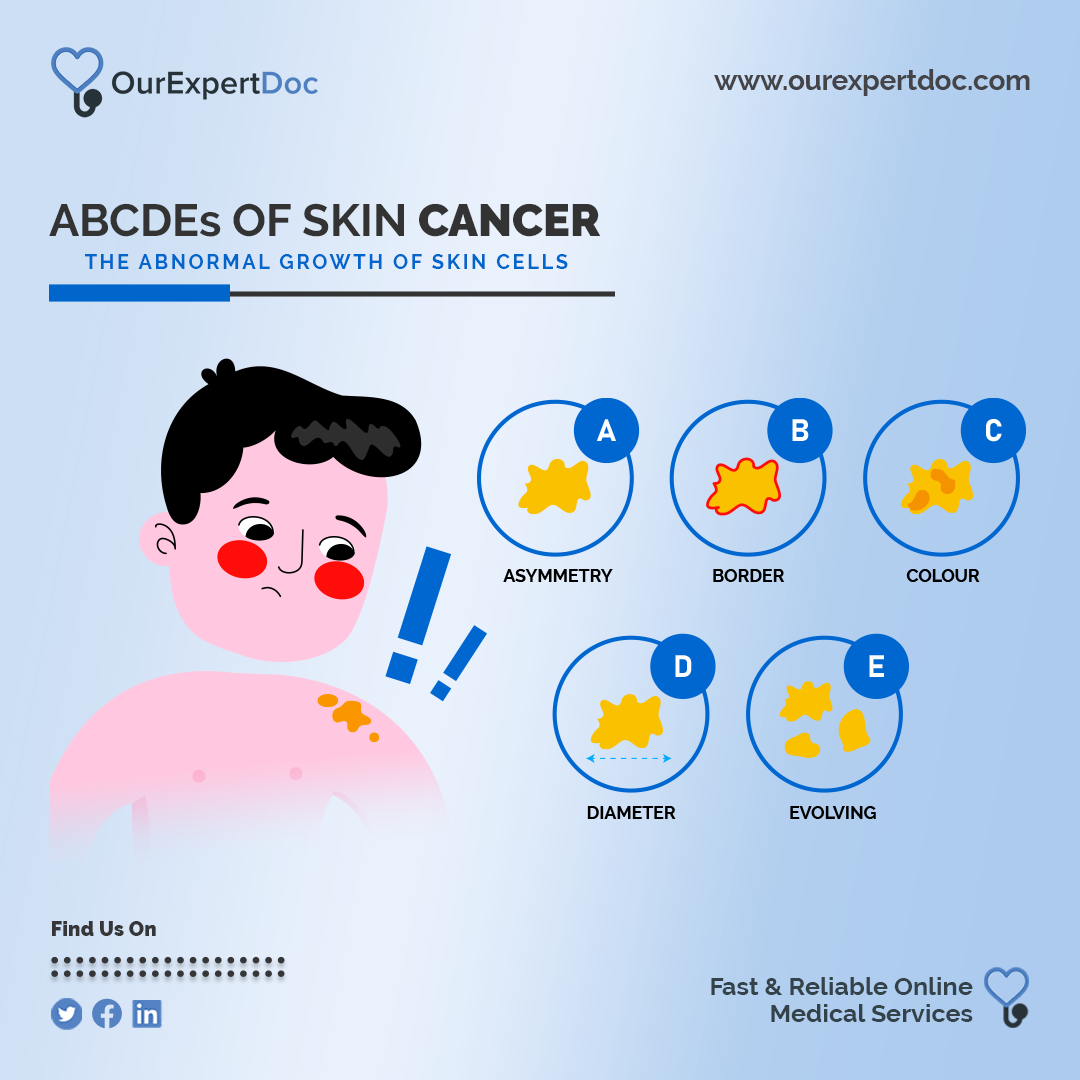
Watch for changes in moles, new growths, or sores that don’t heal. Use the ABCDE rule for melanoma:
Asymmetry
Border irregularity
Color variation
Diameter larger than 6mm
Evolving shape or size
Diagnosis
Skin Exam
A dermatologist inspects the skin for suspicious growths.
Biopsy
A small sample of skin is removed for testing.
Dermatoscopy
Uses a magnifying device to examine moles and lesions.
Treatment
Surgical Removal
Excision of the affected area is common for all types.
Cryotherapy
Freezing cancerous lesions, typically for early-stage BCC or SCC.
Radiation Therapy
Used for cases where surgery isn’t an option.
Immunotherapy or Targeted Therapy
Often used for advanced melanoma.
Screening
Regular self-examinations and annual dermatologist check-ups are key to catching skin cancer early.
Prevention
Use broad-spectrum sunscreen (SPF 30 or higher) daily.
Avoid peak sun hours (10 AM to 4 PM).
Wear protective clothing, hats, and sunglasses.
Avoid tanning beds and opt for sunless tanning products.
Early detection and prompt treatment can significantly improve outcomes for skin cancer.
You may also like to read about