
COPD Exacerbation (Flare-Up): Symptoms, Causes, Treatment, and When to Go to the ER
Reviewed by Kamran Mahmood, MD, MPH, Associate Professor of Medicine, Duke University Medical Center, Board Certified in Pulmonology & Critical Care.
COPD Exacerbation (Flare-Up): Symptoms, Causes, Treatment, and When to Go to the ER
A COPD exacerbation, often called a COPD flare-up, occurs when breathing suddenly becomes worse than usual day-to-day symptoms in a patient with COPD. You may notice increased shortness of breath, heavier coughing, thicker mucus, or signs of infection. Doctors refer to this as an acute exacerbation of COPD (AECOPD), and it can range from mild to life-threatening.
These flare-ups are one of the most serious aspects of chronic obstructive pulmonary disease. Without prompt treatment, they can lead to emergency room visits, hospitalization, permanent lung damage, or respiratory failure. For additional patient education, the American Thoracic Society provides a helpful COPD exacerbation guide.
The good news is that recognizing COPD exacerbation symptoms early and starting the right treatment can prevent complications and speed recovery.
In this guide, you’ll learn about:
Early warning signs
Common causes and triggers
First-line treatments
When to go to the hospital
How to prevent future flare-ups
And when to talk to a COPD doctor online at OurExpertDoc
What Is a COPD Exacerbation?
A COPD exacerbation (flare-up) is a sudden worsening of your usual symptoms caused by airway inflammation, infection, or environmental triggers. During a flare-up, your airways swell, mucus increases, and breathing becomes more difficult. Doctors call this an acute exacerbation of COPD (AECOPD).
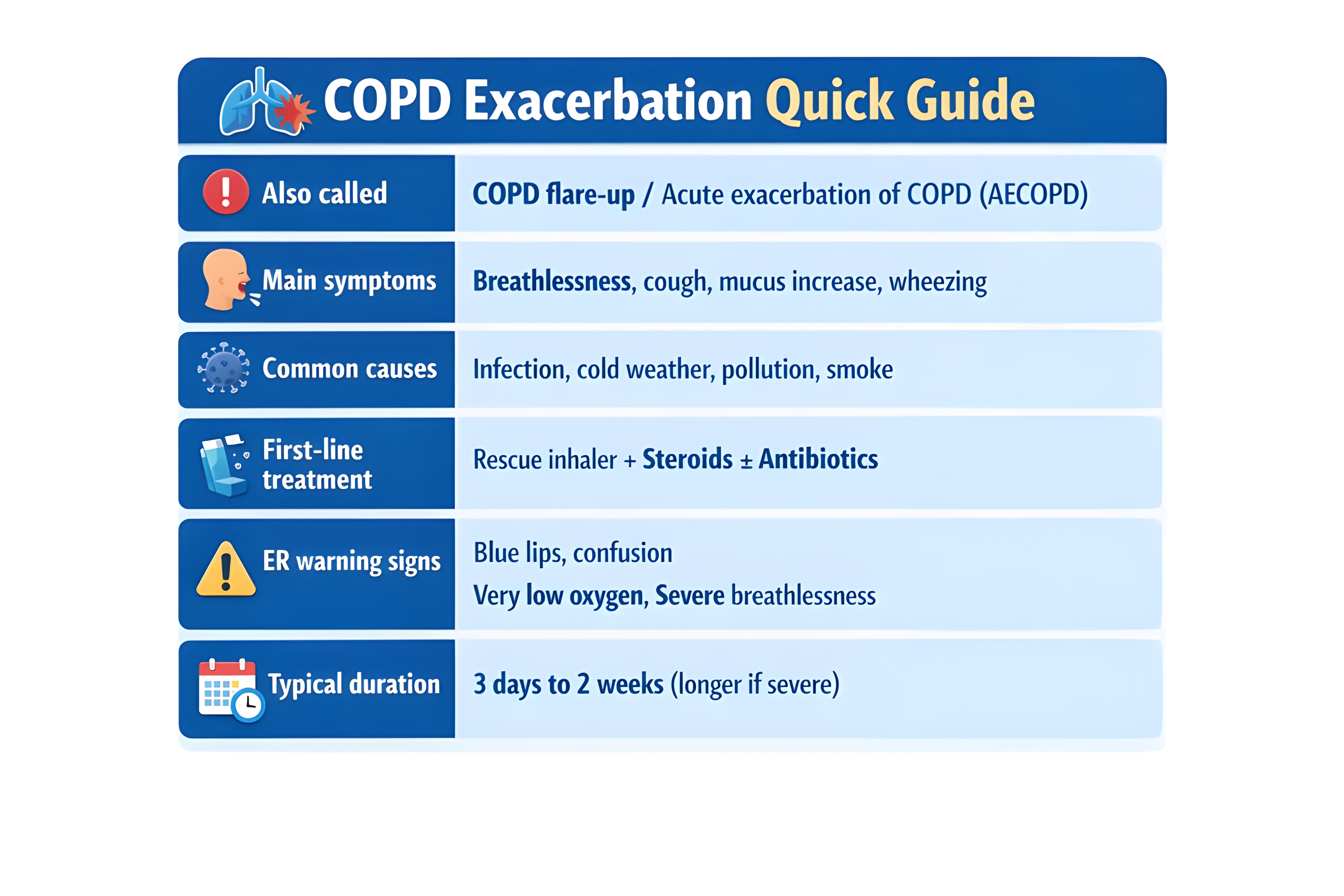
Common symptoms include:
Increased shortness of breath
More coughing or wheezing
Increased sputum
Yellow/green sputum
Fatigue or low energy
Using your rescue inhaler more often
Even mild flare-ups can worsen quickly, so early treatment is important.
Seek emergency care if you have:
Severe breathlessness at rest
Blue lips or fingers
Confusion or drowsiness
Oxygen below 88%
Chest pain or trouble speaking
You can contact a COPD specialist online right now.
What Is an Acute Exacerbation of COPD (AECOPD)?
Doctors use the medical term acute exacerbation of COPD (AECOPD) to describe a sudden and sustained worsening of COPD symptoms that goes beyond normal day-to-day variation.
Unlike a “bad breathing day,” an exacerbation:
lasts longer
feels noticeably worse
often requires extra medication or medical care
Most flare-ups are triggered by respiratory infections, air pollution, or cold weather irritation. Even small triggers can cause significant inflammation inside already sensitive airways.
The key difference? Your regular inhalers may not control symptoms like they usually do.
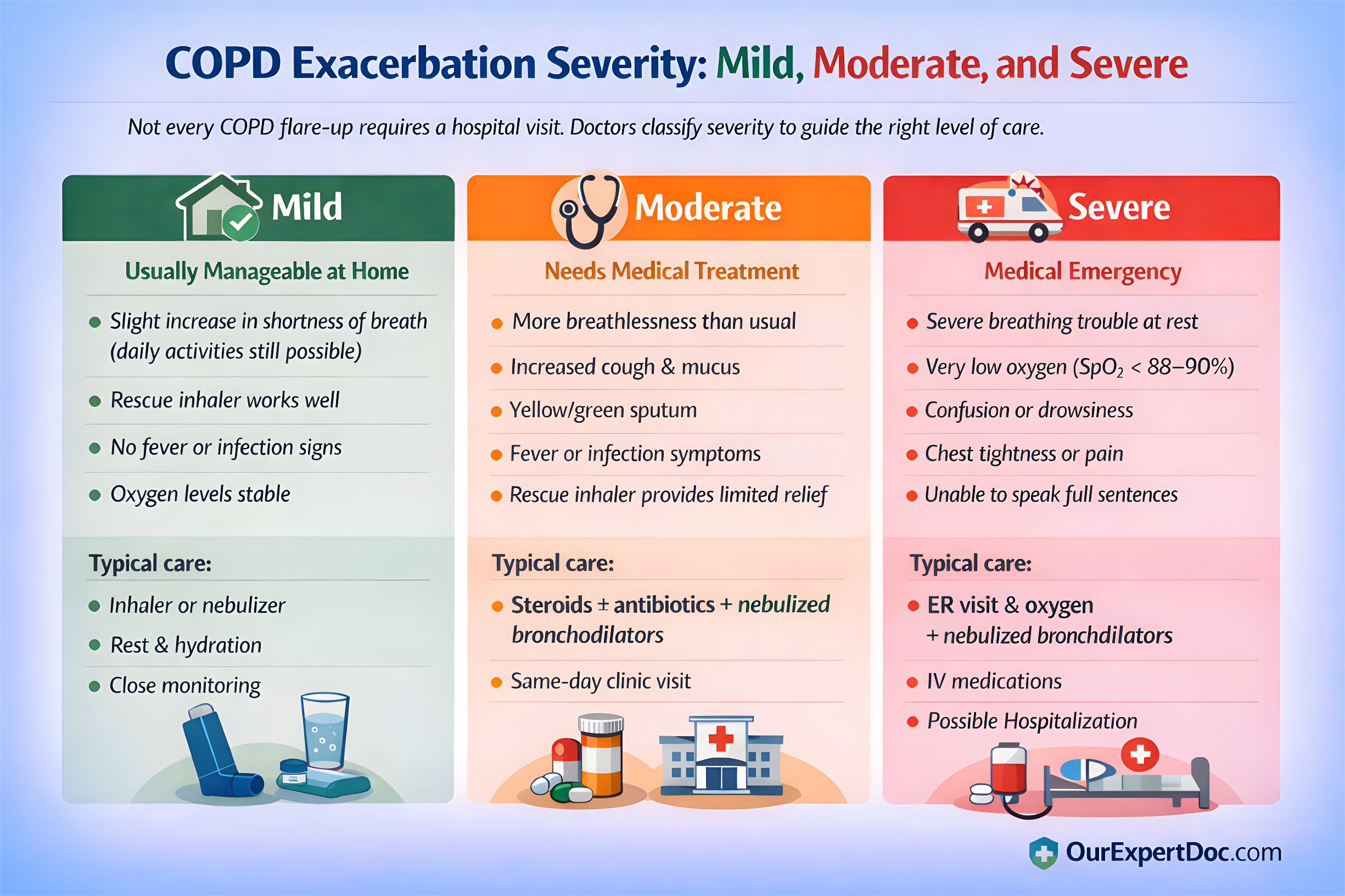
Mild vs Moderate vs Severe Exacerbations
Why Flare-Ups Matter Long-Term
A COPD exacerbation isn’t just temporary, frequent flare-ups can cause lasting lung damage. Repeated episodes may permanently reduce lung function, increase hospitalizations, raise the risk of respiratory infections and failure, speed disease progression, and even shorten life expectancy.
Because moderate or severe exacerbations can cause irreversible airway damage, preventing them is one of the most important parts of COPD management.
If you’ve had two or more flare-ups in a year, talk to a COPD specialist about adjusting your treatment plan.
Why COPD Gets Worse in Cold Weather
Many people notice their COPD symptoms worsen in winter. Cold or heated-dry air causes bronchospasm, thickens mucus, and makes breathing harder, while winter viruses and indoor irritants increase the risk of infections and flare-ups.
Common winter triggers
Cold air exposure
Respiratory infections, like flu, COVID, other viral infections, or bacterial infections
Smoke, dust, or poor air quality
How to protect yourself
Wear a mask to prevent inhaling polluted air or catching infections
Avoid very cold or polluted air
Improve indoor ventilation
Wash hands and avoid sick contacts
Stay hydrated and keep inhalers nearby
Get flu, COVID, RSV, and pneumococcal vaccines
Taking these simple steps can significantly reduce winter COPD exacerbations and help keep your breathing stable.
Causes and Triggers of COPD Exacerbations
A COPD flare-up usually happens when something irritates or infects your lungs. The most common triggers are infections, air pollution, and missed medications. Identifying and avoiding your personal triggers can significantly reduce future exacerbations.
Common triggers include:
Infections (most common)
Common cold, flu, COVID-19, or other viral infections
Bacterial respiratory infections
Environmental irritants
Smoke (active or second-hand)
Vaping
Drugs like marijuana
Air pollution, dust, fumes
Strong perfumes, sprays, or chemicals
Medication gaps
Skipping maintenance inhalers
Running out of medications
Poor inhaler technique
Other factors
Cold weather
Allergies
Stress, fatigue, or poor sleep
Tracking patterns like mucus changes, oxygen levels, and missed doses can help you spot triggers early and prevent a full flare-up.
How Doctors Diagnose a COPD Exacerbation
There isn’t a single test for a COPD exacerbation. Doctors diagnose it based on your symptoms, exam findings, oxygen levels, and a few basic tests to assess severity and rule out problems like infection or pneumonia.
What doctors check:
Changes in breathing, cough, and mucus
Vital signs (heart rate, breathing rate, temperature)
Oxygen levels (SpO₂)
Lung exam for wheezing or infection
Possible tests:
Pulse oximetry
Chest X-ray
Blood tests
ABG (for severe cases)
Based on the results, you may receive home treatment, medications (inhalers, steroids, antibiotics), oxygen, or hospital care. Early evaluation helps prevent complications and speeds recovery.
COPD Exacerbation Treatment (First-Line)
The goal of COPD exacerbation treatment is to quickly open the airways, reduce inflammation, treat infection if present, and restore oxygen levels. Starting treatment early helps you recover faster and lowers the risk of hospitalization.
Common treatments include:
Rescue inhalers or nebulizers
Short-acting bronchodilators (like albuterol or ipratropium) relax airway muscles and improve breathing within minutes.
Steroids (corticosteroids)
Short courses reduce lung inflammation, speed recovery, and prevent worsening symptoms.
Antibiotics (when infection is suspected)
Used if you have fever, colored phlegm, or signs of bacterial infection.
Oxygen therapy
Given if oxygen levels are low and carefully monitored by your clinician.
Hospital care (severe cases)
May include IV medications, frequent nebulizers, and breathing support such as BiPAP or mechanical ventilation.
Most mild to moderate flare-ups improve within a few days with early treatment. If symptoms aren’t improving within 24–48 hours, contact a COPD doctor.
Antibiotics for COPD Exacerbation — When Are They Needed?
Antibiotics are not needed for every COPD flare-up because many exacerbations are caused by viruses, cold air, or pollution rather than bacteria.
However, they may help when signs of a bacterial infection are present, such as yellow or green sputum, thicker mucus, fever, or worsening breathlessness. Antiviral medications are also available for influenza/flu and COVID.
In these moderate to severe cases, antibiotics can speed recovery and reduce complications. They do not help viral illnesses other than influenza and COVID, and unnecessary use may cause side effects or antibiotic resistance.
How Long Does a COPD Flare-Up Last?
A COPD exacerbation can last anywhere from a few days to several weeks, depending on severity and how quickly treatment begins.
Mild flare-ups often improve within 2–3 days with rescue inhalers and rest, moderate episodes may take 1–2 weeks and usually require steroids or antibiotics, while severe exacerbations can last several weeks and may need ER care or hospitalization.
Breathing typically improves first, but fatigue and cough often take longer to recover. Early treatment speeds healing and reduces complications.
If symptoms don’t improve within a few days or worsen, contact your doctor. Most people should follow up within 1–2 weeks after recovery to adjust medications and prevent future flare-ups.
Tracking oxygen levels, inhaler use, and mucus changes at home can help you catch problems early.
ICD-10 Code for COPD Exacerbation
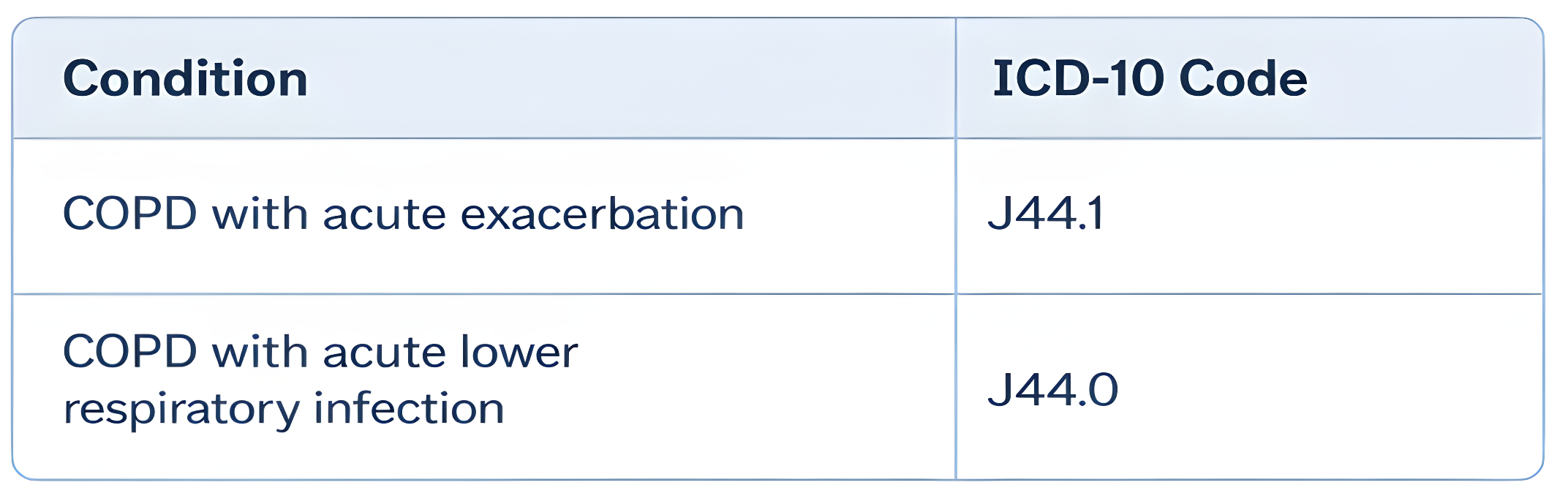
Doctors use ICD-10 codes on medical records and insurance claims to document your diagnosis. The most common code for a COPD flare-up is J44.1 — COPD with acute exacerbation, used when symptoms suddenly worsen and require treatment.
If a lung infection like pneumonia or bronchitis is present, you may see J44.0 — COPD with acute lower respiratory infection instead. Final coding depends on your clinician’s documentation and test results.
When to Go to the ER (and When Urgent Care Is Enough)
During a COPD flare-up, knowing when to seek help is important. Mild symptoms can often be managed at home, but worsening breathing or infection signs may need same-day care. Severe symptoms require emergency treatment.
Go to the ER immediately if you have:
Severe breathlessness at rest
Blue lips or fingertips
Confusion or drowsiness
Chest pain or pressure
Oxygen below 88–90%
Rescue inhaler not helping
Trouble speaking full sentences
Seek same-day clinic or telehealth if you have:
Increasing breathlessness
Yellow/green mucus
Fever or chills
More frequent inhaler use
Worsening cough or wheezing
Monitor at home if:
Symptoms are mild
Inhaler provides relief
No fever
Oxygen stable
When in doubt, get medical advice early. Treating a flare-up sooner can prevent hospitalization.
Prevention & Safety Tips to Reduce Future Exacerbations
Many COPD flare-ups are preventable with simple daily habits. Protecting your lungs, avoiding infections, and staying consistent with treatment can significantly reduce hospital visits and long-term damage.
Key prevention steps:
Vaccines & infection control
Flu, COVID, RSV, and pneumococcal vaccines
Wash hands often and avoid sick contacts
Avoid smoke & irritants
Quit smoking, vaping and drugs
Avoid dust, pollution, fumes, and strong odors
Improve indoor ventilation
Take medications daily
Use maintenance inhalers consistently
Check inhaler technique regularly
Stay active
Pulmonary rehab or light daily exercise
Healthy diet
Cold-weather protection
Wear a scarf/mask outdoors
Avoid cold, dry air and heavy pollution
Have a COPD action plan
Know when to use rescue meds
Track oxygen saturation, mucus changes, and symptoms
Seek care early if breathing worsens
Small daily steps can greatly lower your risk of future exacerbations.
COPD
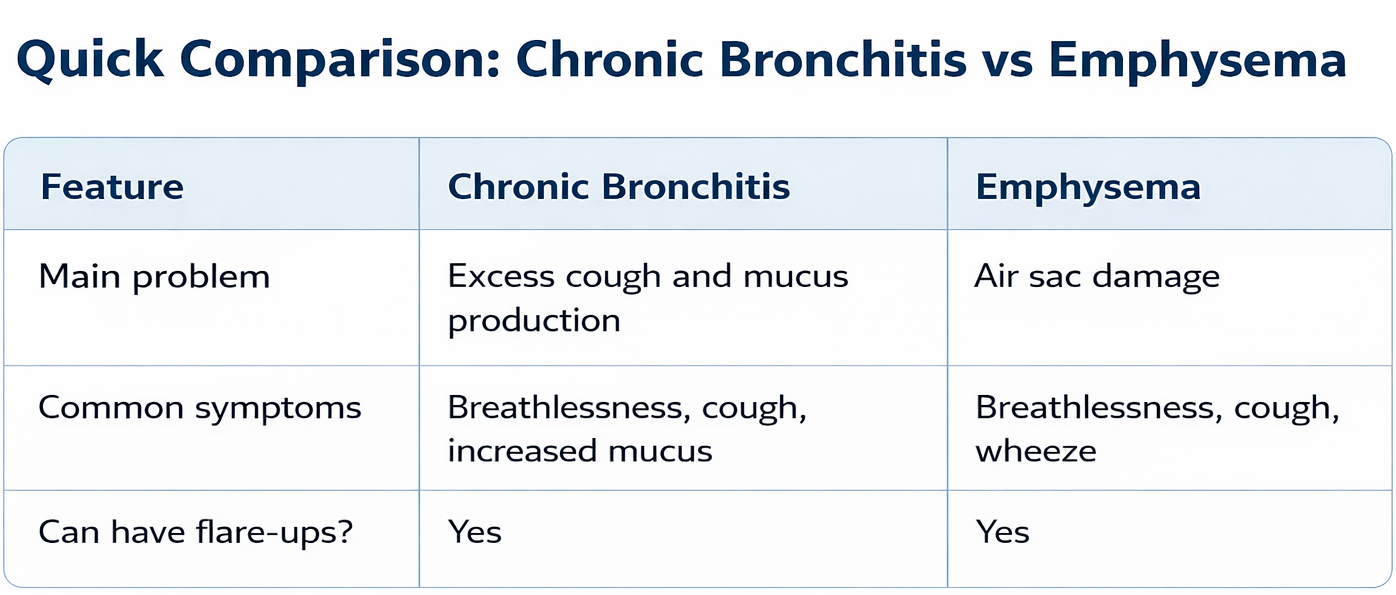
COPD can be of two types– emphysema and chronic bronchitis.
Emphysema damages the air sacs (alveoli), trapping air and reducing oxygen exchange, which causes breathlessness and difficulty exhaling. Chronic bronchitis affects the airways, leading to inflammation, excess mucus, and a persistent cough. Although the underlying damage differs, both can cause COPD flare-ups and are treated similarly with inhalers, steroids, oxygen, and infection control.
Quick comparison
Talk to a Doctor Online at OurExpertDoc
If you notice COPD exacerbation (flare-up) symptoms, don’t wait for breathing to get worse. Early treatment can prevent complications and hospital visits.
With OurExpertDoc, you can speak to a licensed doctor or lung specialist online from the comfort of home.
FAQs About COPD Exacerbation (Flare-Ups)
What is a COPD exacerbation (flare-up)?
A COPD exacerbation is a sudden worsening of symptoms like shortness of breath, coughing, and mucus production that goes beyond your normal daily variation. It often requires extra medication or medical care.
What triggers COPD exacerbations in winter?
Cold air, viruses, bacterial infections, and indoor irritants commonly trigger winter flare-ups.
What are the symptoms of a COPD flare-up?
Common symptoms include increased breathlessness, more coughing, thicker or colored mucus, wheezing, fatigue, and needing your rescue inhaler more often.
How do I know if my COPD flare-up is an emergency?
Go to the ER if you have severe breathlessness at rest, blue lips, confusion, chest pain, or oxygen levels below 88–90%. These can signal low oxygen or respiratory failure.
How long does a COPD exacerbation last?
Mild flare-ups may last a few days, moderate ones 1–2 weeks, and severe cases several weeks. Early treatment usually shortens recovery time.
What is the first-line treatment for COPD exacerbation?
Short-acting bronchodilators (rescue inhalers or nebulizers), corticosteroids, and sometimes oxygen therapy are first-line treatments. Antibiotics are used only if infection is suspected.
Do you always need antibiotics for a COPD exacerbation?
No. Antibiotics help only if a bacterial infection is present. Viral or mild flare-ups usually don’t benefit from antibiotics.
What steroids are used for COPD exacerbation?
Doctors typically prescribe short courses of systemic corticosteroids to reduce inflammation and improve breathing. Your clinician will decide the right medication and duration.
What is the ICD-10 code for COPD with acute exacerbation?
The most common code is J44.1 — COPD with acute exacerbation. Coding may vary depending on infections or other conditions.
Can a COPD exacerbation cause respiratory failure?
Yes. Severe or untreated flare-ups can increase the risk of respiratory failure and hospitalization, which is why early treatment is important.
How can I prevent frequent COPD flare-ups?
Get vaccinated, take maintenance inhalers daily, avoid smoke and pollution, wash hands regularly, and follow a COPD action plan.
Can I talk to a COPD doctor online?
Yes. Platforms like OurExpertDoc allow you to consult licensed doctors online for symptom evaluation, treatment advice, and prescriptions when appropriate.